THE PUBLIC RECORD
The uncomfortable messages sit inside a very specific legal review.
EOS reviewed the intelligence service's handling of a source who had contacted an agent posing as an ISIL member. The report describes general approving language in the exchange, but it also records the agent's stated effort to delay the plan and learn about timing, location and method.
The committee reviewed documents from both NIS and PST and interviewed 23 current and former employees: 16 from NIS and seven from PST. It says both services were given an opportunity to check the report for factual errors and misunderstandings.
WHAT THE REPORT DECIDED
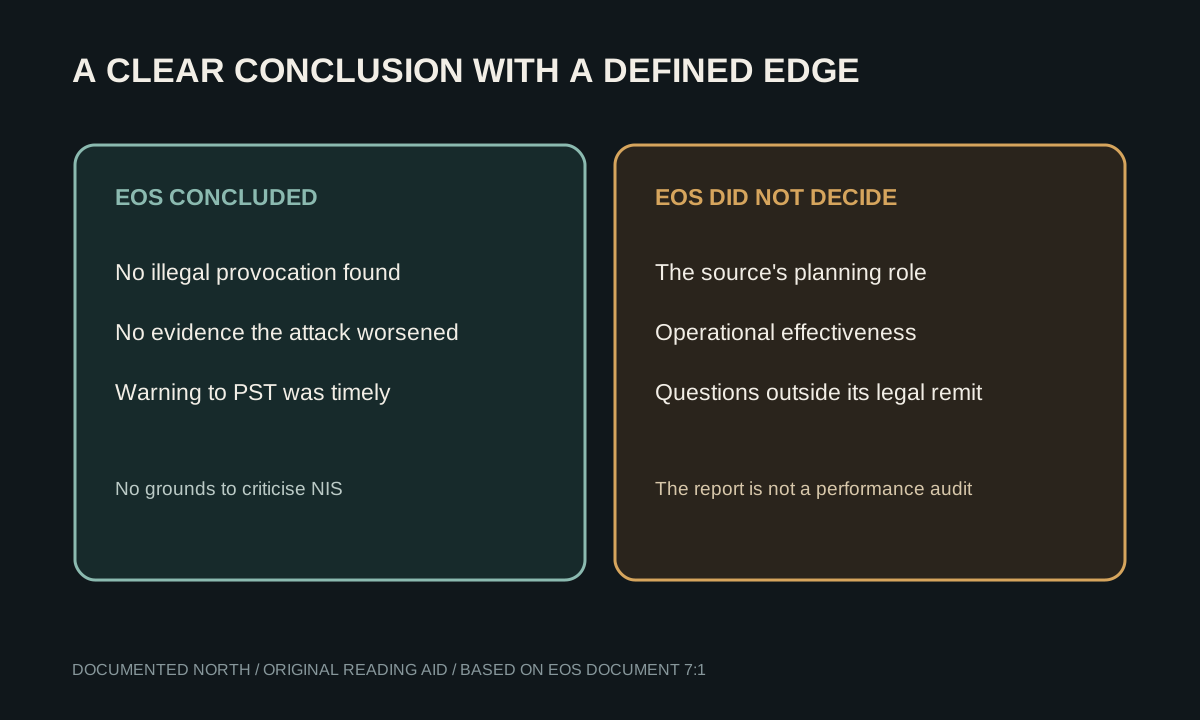
EOS's conclusion is clear—and bounded.
EOS found no evidence that the source handling caused the attack or made it more serious or extensive. It also concluded that NIS shared relevant threat information with PST and warned the service in time. These are the report's findings and they should lead any account of the case.
At the same time, EOS says it did not determine the source's role in planning, because it had already concluded that the agent's statements were not capable of influencing the plan to the legally relevant degree. The committee's mandate was legality oversight, not an audit of operational effectiveness. The public record therefore leaves some questions unanswered without supporting a claim that the opposite of EOS's findings occurred.
THE TIMELINE THAT MATTERS
A renewed contact on 22 June was not shared with PST.
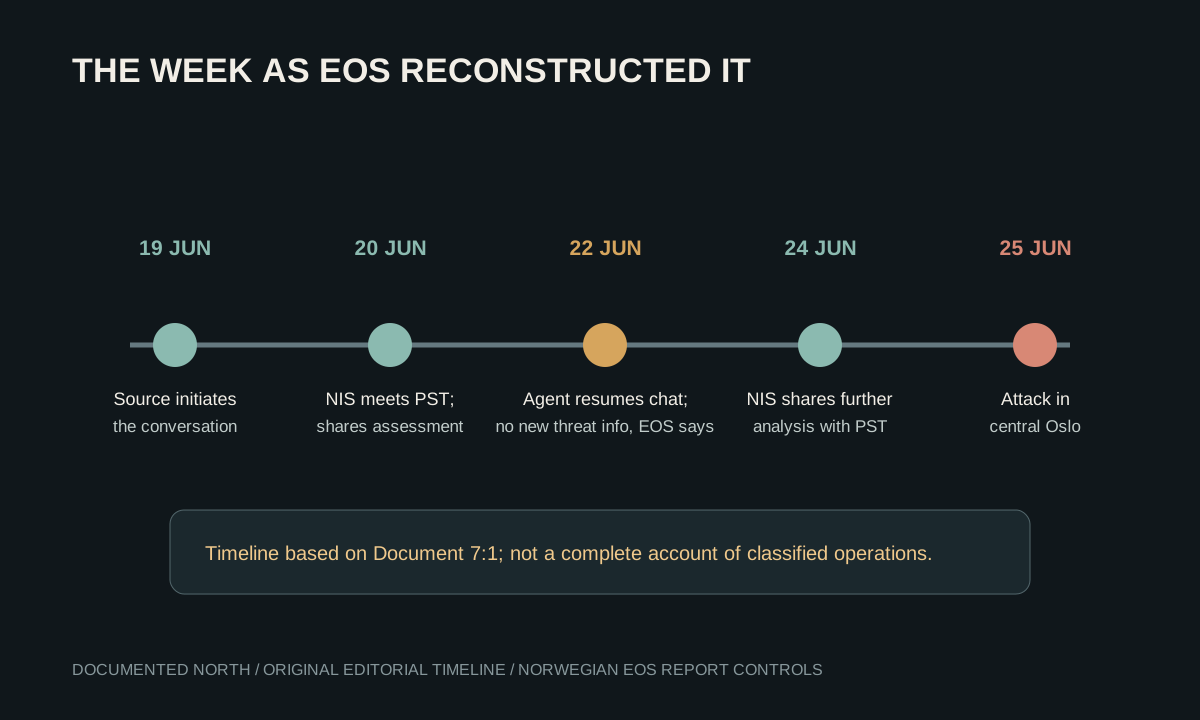
The report says the source opened contact on 19 June. NIS met PST and shared the threat assessment on 20 June. The agent resumed the conversation on 22 June; NIS judged that it contained no new threat information and did not report the renewed contact internally or to PST. On 24 June, after reviewing social-media material, NIS met PST again and shared its assessment.
This sequence is worth understanding because it shows the exact boundary EOS examined: the content and handling of the source contact, the information passed to PST, and the timing of warnings. It is not a separate finding of misconduct.