DOCUMENTED NORTH

RESEARCH UPDATE 02 · 12 SEPTEMBER 2026

The network is real.
The single command is not established.

Update 02 adds a stronger bridge between political, workplace, diplomatic and military-security channels: Paul Björk’s documented U.S. contacts, a March 1950 archive conflict, the Finnish Anto/Puskala split and a longer Norrbotten information lineage. The evidence still supports a compartmented ecosystem — not one hidden command.

DOCUMENTEDcontemporary or official records support the connection
CONTEXTshared actor, institution or strategic setting — not one operation
OPENa precise lead that still needs the missing source
UNPROVENplausible pattern deliberately kept out of the fact layer

01 / THE WORKING MODEL

A compartmented mesh,
not a pyramid.

COMPARTMENTED MESH

Several channels can touch the same event without sharing one command.

CIA/OSO, Norwegian military intelligence, Swedish T-kontoret, security police, Social Democratic party networks and workplace contacts appear in overlapping records. The overlap is documented; a single Nordic command structure is not.

SOVEREIGNTY FIREWALL

Cooperate with allies — while protecting national control.

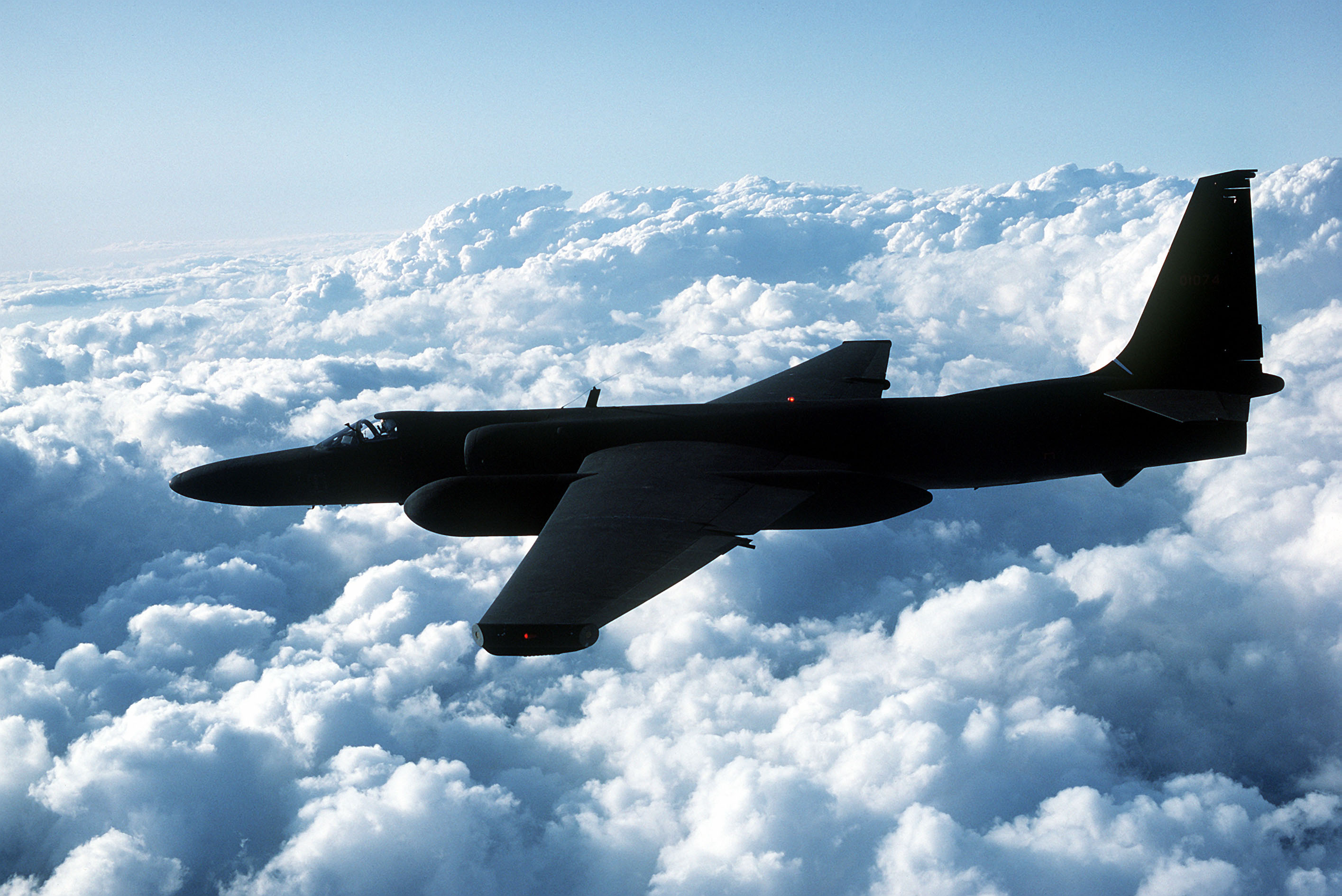
Evang's U-2 relationship with the CIA is a useful test case: cooperation was real, but information was compartmented. Nordic liaison could also provide an independent way to verify what an ally had done.

WORKPLACE INTELLIGENCE LAYER

Security information also moved through workplaces and political networks.

Swedish and Norwegian inquiries document contact surfaces linking security organs with labour, party or workplace networks. The exact legality and function varied by country and period.

02 / SIX FINDINGS WORTH KEEPING

What the evidence can carry today.

DOCUMENTED · PRIMARY U.S. RECORD

Haakon Lie ↔ CIA / OSO, 1951

A CIA Director's Log for 22–24 September 1951 states that OSO planned to discuss expanding cooperation with Haakon Lie and what the log called the Norwegian Labour Party's intelligence organisation under his control. This proves a direct liaison channel; it does not by itself prove formal CIA-agent status.

Open CIA record ↗
DOCUMENTED · SWEDISH STATE INQUIRY

Grupp B ↔ SAP: information flowed both ways

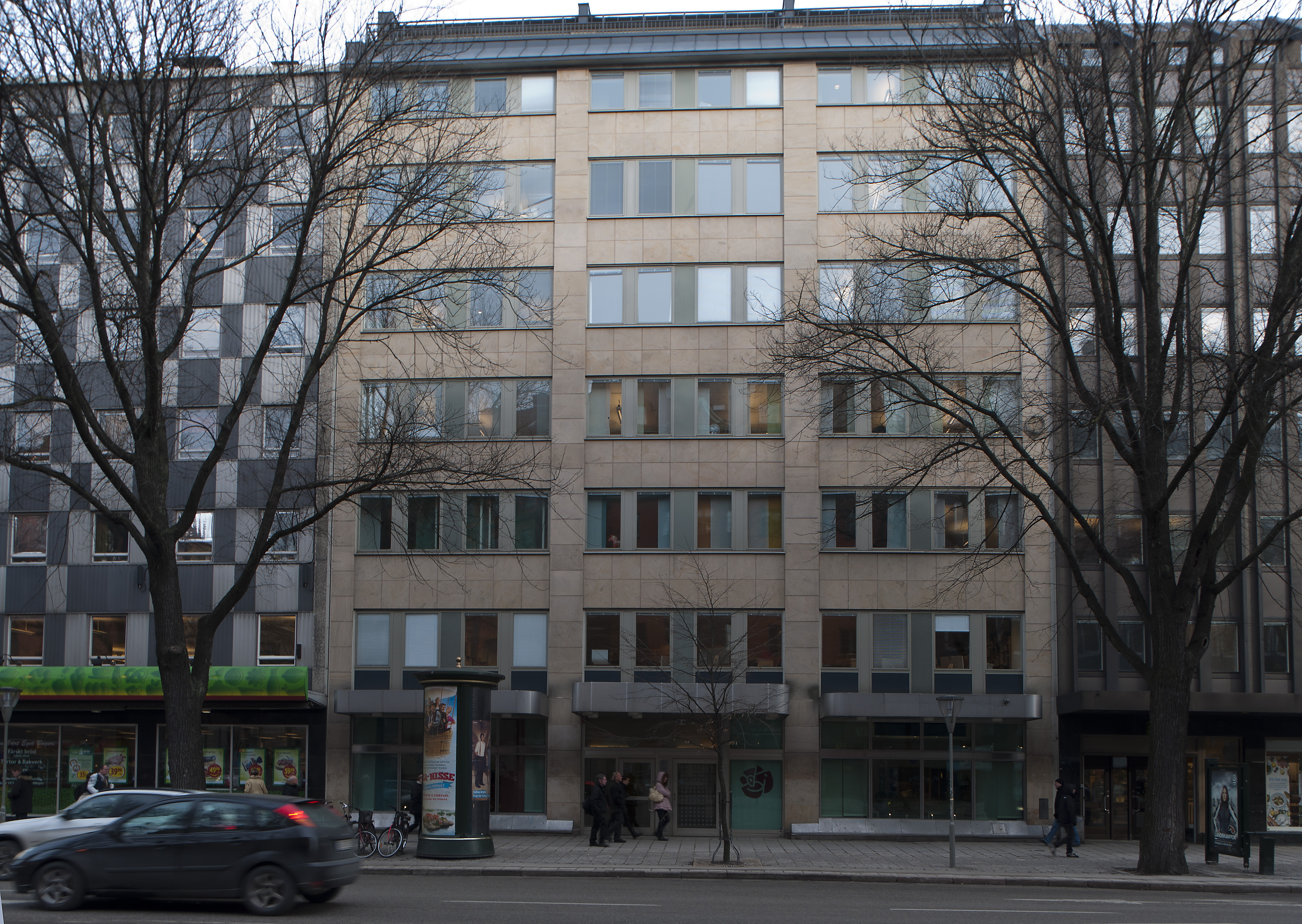
SOU 2002:92 identifies Grupp B reports in the Social Democratic Party archive. Some documents were marked “68”, the address of the party headquarters at Sveavägen 68. The finding is stronger than mere personal acquaintance: reports produced inside a secret military unit reached the party archive.

Open SOU 2002:92, part 2 ↗
DOCUMENTED · INSTITUTIONAL BRIDGE

Workplace networks became a security resource

The Swedish inquiry describes how Social Democratic workplace contacts built by Paul Björk and Arne Pettersson became relevant to Birger Elmér and military security. Grupp B later built its own collection system around communist influence in strategically important workplaces.

Open SOU 2002:92, part 3 ↗
DOCUMENTED · DECLASSIFIED CIA HISTORY

Vilhelm Evang ↔ CIA U-2 ↔ Bodø

Declassified U.S. history records Norwegian radar detection of U-2 activity, Evang's 1958 briefing in Washington, Detachment B at Bodø and mission 4093 on 6 November 1958. This establishes Bodø as an operational Cold War reconnaissance node before the 1960 Powers flight.

Open NARA/CIA history ↗
DOCUMENTED CONTEXT · INSTITUTIONAL LINEAGE

Stella Polaris → postwar Swedish intelligence

Stella Polaris belongs to the documented Swedish-Finnish SIGINT history that feeds into the postwar intelligence environment from which T-kontoret emerged. Institutional lineage is useful evidence; it must not be presented as one unchanged operation running across decades.

Open Stella Polaris dossier →
SYNTHESIS · GEOGRAPHIC CONTINUITY

North Watch Corridor

Kirkenes, Norrbotten, Bodø and the wider Nordkalotten repeatedly appear in political, workplace, police and military-security records. The geography is a real continuity created by the Soviet border, strategic industry and transport. A single integrated “North Watch” organisation is not established; the name is only an editorial synthesis label.

Open Nordic liaison synthesis →

03 / TIMELINE

Where the channels begin to overlap.

  1. 1947

    Norwegian Labour Party receives U.S. aid packages — useful political context, but not evidence of an intelligence relationship by itself.

  2. 1950

    Nordic Social Democratic anti-communist information exchange is documented in Swedish state material; reports from the political sphere also entered diplomatic and military-security channels.

  3. SEP 1951

    CIA/OSO Director's Log records planned expansion of cooperation with Haakon Lie and the Labour Party intelligence organisation described in the U.S. record.

  4. 1953

    Swedish workplace contacts and Birger Elmér's security work begin to intersect more clearly in the official reconstruction.

  5. 1958

    Grupp B is formalised; in Norway Evang is briefed on U-2 and Bodø becomes part of CIA reconnaissance cooperation.

  6. 1962

    Grupp B reports marked “68” appear in the SAP archive, documenting a direct information flow from the secret military unit to the party environment.

  7. 1963–64

    Norrbotten/Nordkalotten communist studies touch military security, Grupp B and political/academic networks. The exact information lineage remains partly unresolved.

04 / RESEARCH UPDATE 02

Seven findings that sharpen the map.

DOCUMENTED · U.S. EMBASSY / ECA CHANNEL

Paul Björk ↔ U.S. Embassy / ECA

SOU 2002:92 reconstructs a sustained channel rather than one isolated meeting. Björk’s 1950 anti-communist material was translated and circulated through the U.S. ECA/embassy environment; an August 1950 study of communism in important Swedish unions went to ECA and then the U.S. Embassy. After a U.S. State Department study grant, Björk briefed Ambassador Butterworth and Marshall Green in February 1953 on Social Democratic anti-communist work in Norrbotten. The inquiry explicitly cautions against converting this into an “American agent” claim.

Open Swedish state inquiry ↗
DATE CONFLICT · PROBABLY SAME EVENT

16 March ↔ 20 March 1950

A Swedish military-archive report records a Nordic Social Democratic meeting in Stockholm on 16 March 1950 with Lie, Gerhardsen, Aspling, Paul Björk, Aimo Anto and Veikko Puskala among the participants. The same state inquiry then says a report from “this meeting” reached the U.S. Embassy, while Dennis A. Flinn’s report dates the Saltsjöbaden meeting to 20 March. The safest current classification is a documented date conflict, probably the same meeting, pending the original U.S. file.

Compare the records ↗
DOCUMENTED · CROSS-SYSTEM DOCUMENT FLOW

Party meeting → embassy → military intelligence

The 16 March meeting report was originally prepared in Finland, reached the Swedish embassy, was translated and passed to Fst/U and then Fst/In. The Swedish archival reference is Fst/In det 1 nr IH 425 In 22/7 1950; Fst/Säk (H) F VIII B, vol. 5, MUST. This is direct evidence that information originating in a Nordic party network crossed into diplomatic and military-intelligence channels.

Open source trail ↗
SOURCE IDENTITY UNRESOLVED

Finland has at least two relevant nodes

Aimo Anto and Veikko Puskala should not be collapsed into one person or function. Anto is tied to Psykotyö and operational communist infiltration in the contemporary descriptions; Puskala appears as the long-running organisational and liaison node who later maintained contact with Birger Elmér. Either could overlap with the unnamed Finnish Social Democratic OSO contact of December 1951 — or the contact may have been a third person. No identification is published here as fact.

Open Finland material ↗
DOCUMENTED CHAIN · IDENTITY STILL REDACTED

[Mihail] → Björk / Lassinantti → Norrbotten mapping

The Swedish inquiry describes an anonymised refugee journalist who, with help from Paul Björk, Ragnar Lassinantti and labour contacts, produced roughly 150 pages of Kommunismen i Norrbotten in 1950–51. Material went to Björk and Arne Pettersson and was intended for police use; copies also survived in the labour-movement archive. His exact identity remains unresolved, and suspicions around his British-journalistic connection remain suspicions rather than proof of British tasking.

Open Norrbotten trail ↗
LONGITUDINAL PATTERN · DIRECT LINEAGE UNPROVEN

Norrbotten, 1950 → 1964

The same geographic and political problem space recurs: [Mihail]’s 1950–51 mapping, Paul Björk’s workplace network, Grupp B’s later registration work, the 1963 Björk/Sparring study context and Bengt Matti’s 1964 research. That continuity is real at the level of place, actors and subject matter. A direct chain showing Matti used [Mihail]’s earlier material has not been found.

Follow the chronology ↗
DOCUMENTED DISTINCTION · DO NOT MERGE CHANNELS

Dennis A. Flinn: State security ≠ CIA

Flinn’s Stockholm reporting and communist-register work belong to the U.S. diplomatic/security channel. He later became Director of the U.S. State Department’s Office of Security. That makes his reporting important, but it is not evidence that every embassy report was a CIA product. Update 02 therefore keeps STATE / EMBASSY / ECA separate from CIA / OSO.

Open Flinn context ↗

What changed from Update 01?

Paul Björk is promoted to a major bridge node; the March 1950 lead is upgraded from a generic open question to a documented date conflict; and the Finnish OSO identity is deliberately kept unresolved because Anto and Puskala represent different documented functions.

See archive targets ↓

05 / VISUAL RECORD

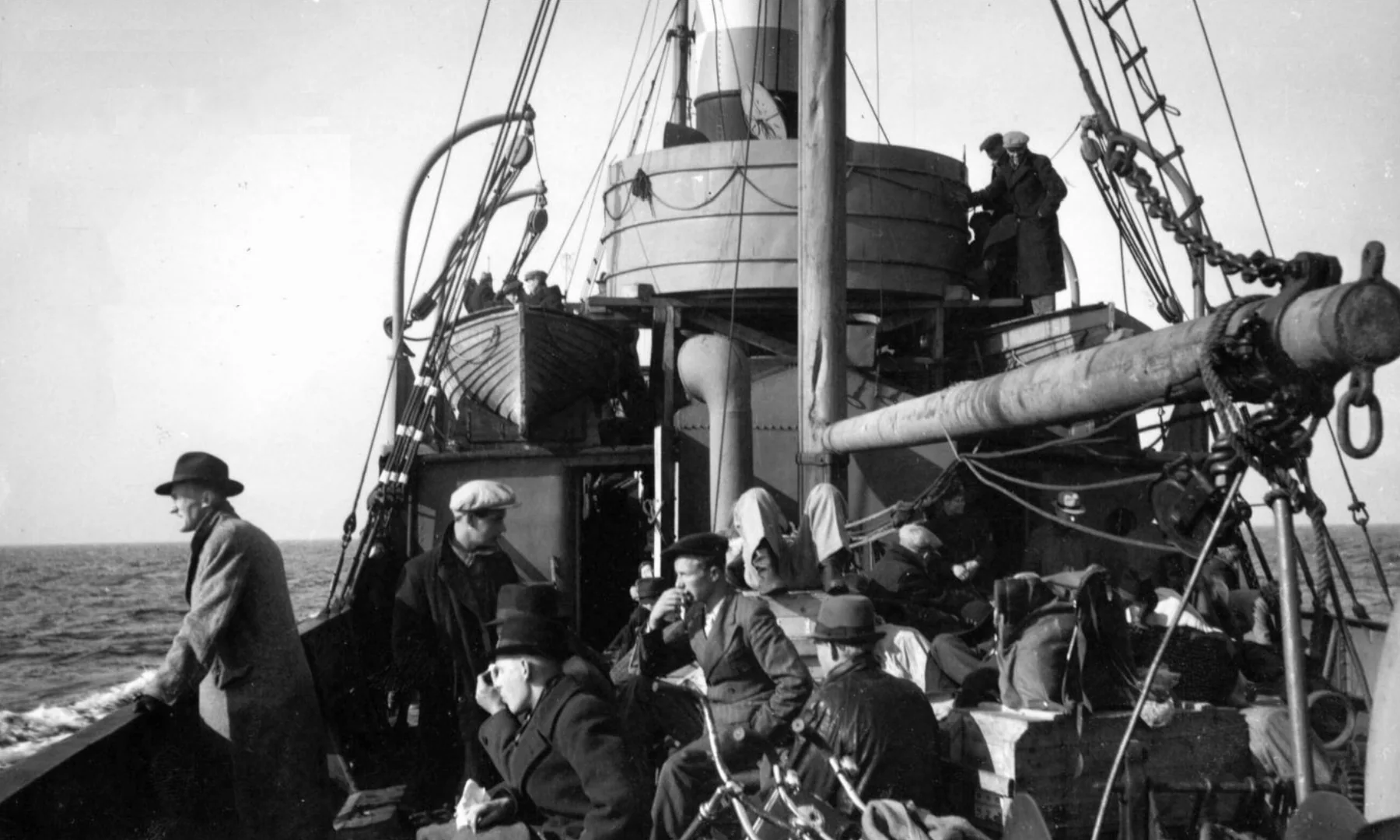
Context images — labelled so they cannot become evidence by accident.

06 / OPEN LEADS

Questions we are deliberately not closing yet.

OPEN

The 14-day discrepancy — Bodø 1958

Why does the Swedish trail contain 20 November when CIA mission 4093 is documented on 6 November? A date error is plausible; a second flight is not yet evidenced.

OPEN

The Finnish OSO contact

The December 1951 CIA material describes a Finnish Social Democratic intelligence contact. Aimo Anto and Veikko Puskala are both relevant nodes, but neither identification is secure yet.

OPEN

[Mihail]

The Swedish inquiry anonymises a journalist who mapped communism in Norrbotten in 1950–51 and had links to political, police and British-journalistic environments. Identity remains unresolved.

UNPROVEN

Matti knowledge lineage

Bengt Matti later researched “Kommunismen i Norrbotten”, echoing an earlier title. No direct source currently proves he used the older mapping material.

DATE CONFLICT

16 / 20 March 1950

The Swedish state inquiry presents the 16 March MUST record and then says a report from “this meeting” also reached the U.S. Embassy, while Dennis Flinn dated the Saltsjöbaden meeting 20 March. The best current reading is probably one meeting represented by conflicting archival dates, but the original U.S. report still needs to be checked.

07 / PERSON & INSTITUTION NODES

The next graph needs more than case numbers.

Vilhelm EvangHaakon LieThede PalmBirger ElmérPaul BjörkVeikko PuskalaAimo AntoCIA / OSOT-kontoretGrupp B / IBNorwegian Intelligence ServiceWorkplace / union networksDennis A. FlinnU.S. Embassy / ECAPsykotyö[Mihail]
NEXT GRAPH RULE

Future nodes should be typed as CASE, PERSON, ORGANISATION, DOCUMENT or LOCATION. That is how we can show a real person bridge without silently converting it into a shared operation.

08 / ARCHIVE TARGETS

What to retrieve next.

SWEDEN / MUST

16 March 1950 original

Fst/In det 1 nr IH 425 In 22/7 1950
Fst/Säk (H) F VIII B, vol. 5, MUST

Goal: establish exact date, authorship, Finnish source path and whether the text itself identifies the listening-method claim more precisely.

UNITED STATES

Flinn’s April 1950 report

Goal: recover the original U.S. Embassy report behind the Saltsjöbaden 20 March date, compare participant list and wording with the Swedish military copy, and identify how the “Finnish Social Democratic source” was described.

FINLAND

Anto / Puskala correspondence

Goal: compare SDP, labour archive and security-history records from 1950–51 against the CIA/OSO title “chief of the intelligence section”. Do not infer identity from job titles translated decades later.

TYÖVÄEN ARKISTO

F:1 · correspondence incl. Veikko Puskala, 1950–51

Finna identifies a surviving archive unit in the Onni Mikkola papers: F:1 Kirjeenvaihtoa: mm. Veikko Puskala (1950–1951). This is now a priority retrieval target because it overlaps the March 1950 Nordic meetings and the December 1951 OSO lead.

Open Finna catalogue ↗

09 / CORE SOURCES

Start with the records, not the theory.

NEW / DEEP-DIVE DESK

Show the rumor.
Show the document.

Five new evidence-labelled investigations: Norway–Epstein, Fideco, Røkke/Norway Seafoods, Det Norske Hus, and the Northern surveillance files. Solid, dashed and dotted connections mean different things.

Open the deep-dive desk →

SAVED RESEARCH / 12 SEPTEMBER 2026

The wider record

DOCUMENTED NORTH separates documented structures, investigated connections, historical context, disputed claims and rumor. A documented connection is not automatically proof of a common operation, corrupt bargain or shared intent.

Five recurring research tracks

Deep-dive record

Claims preserved as claims

Highest-value missing records

  1. Original Fideco/Bird option agreement, amendments and board minutes.
  2. Original NRK Brennpunkt Fideco broadcast and local investment/delivery agreements.
  3. SND board, equity and credit records concerning Rokke-linked companies and Melbu.
  4. Cabinet and Prime Minister's Office records identifying Det Norske Hus councils, invitations, participants and minutes.
  5. Lund Commission archive journal plus North Norway interviews and working papers.
  6. Documents behind the 2015 Rod-Larsen remuneration and ledger-level Southern Trust tracing.
  7. Complete Ronald Bye hearing transcript from 24 February 1997.

Editorial corrections

Machine-readable research layers